
What can a faith based trauma healing memoir offer without suggesting that healing happens quickly or follows the same path for everyone? If painful experiences have left you feeling alone, it’s understandable to wonder whether a faith centered story will feel comforting or judgmental. Faith can be a source of hope, but every reader’s relationship with it is personal. You’re allowed to approach a book at your own pace, pause when you need to, and decide what feels meaningful.
This guide looks at what a faith centered memoir may offer, what it can’t promise, and how to decide whether a book feels right for you. It also introduces Carmen Cotto Santiago’s Victorious… My Conversations with God, which brings together personal testimony, biblical passages, and practical tools for reflection and personal development. Use the questions here to consider the book’s voice and approach, while remembering that reading may support reflection but doesn’t replace professional mental health care. Let curiosity, not pressure, guide your next step.
Key Takeaways
- A faith based trauma healing memoir shares one person’s story through a faith perspective, not a universal path to follow.
- Consider the author’s voice, faith perspective, reflection tools, and approach before choosing a book.
- A memoir may prompt personal reflection, but it isn’t clinical care or a promise of recovery. Readers’ needs and responses differ.
- Think about your faith fit, preferred voice, content, and the reading experience you want.
- Victorious… My Conversations with God by Carmen Cotto Santiago brings together testimony, biblical passages, and personal development tools. Consider whether those elements suit the kind of reflection you’re seeking.
What can a faith-based trauma healing memoir offer a reader?
A faith based trauma healing memoir is one person’s account of painful experiences, understood through a faith perspective. It may offer language for reflection, a sense of companionship, or a way to consider how belief connects with hardship. It can’t tell you exactly what your own story means or prescribe a path forward.
A faith based trauma healing memoir shares personal testimony shaped by spiritual reflection. It offers a perspective to consider, not a universal guide or promise of recovery. The word “trauma” can describe a range of experiences and effects. For a neutral overview of psychological trauma, readers can explore the topic separately. A memoir presents one human perspective, but it isn’t a clinical assessment or mental health treatment.
How a memoir differs from a guide or clinical resource
A memoir tells what one author experienced and how they made meaning of it. Professional advice and treatment plans serve a different purpose and should come from appropriately qualified providers. Practical ideas in a book aren’t a step by step treatment plan, and you don’t have to adopt every belief or practice the author describes.
In Victorious… My Conversations with God, Carmen Cotto Santiago brings together personal testimony, biblical passages, and practical tools for personal development. These elements may prompt your own reflection, but they don’t establish a clinical method or guarantee a particular result. You can pause, skip a passage, or set the book aside. Your comfort matters.
Why readers seek faith alongside personal testimony
For some readers, biblical passages offer a familiar framework for thinking about meaning, hope, and spiritual connection. A personal story alongside those passages may feel less isolating than abstract advice. For others, religious language may feel uncomfortable, complicated, or connected to painful experiences. Both responses deserve respect.
Before choosing a faith based trauma healing memoir, consider whether its spiritual perspective feels supportive to you now. Ask yourself: Do I want a story grounded in scripture? Would practical prompts or personal development tools help me reflect? Does the author’s voice leave room for my questions? These questions can help you approach a book with curiosity rather than pressure.
Hope can open a door, but it isn’t a deadline or a guarantee. A memoir may offer companionship and ideas to consider, but it can’t promise that every reader will feel understood or experience healing. If reading brings up more than you feel ready to hold alone, it’s okay to stop and seek support from a qualified mental health professional. You can move at your own pace.
What to look for in a faith-based trauma healing memoir
A book can be honest and moving without being right for every reader. Before choosing a faith based trauma healing memoir, decide what you hope to find: a companionable voice, a spiritual perspective that sits comfortably with your beliefs, or ideas that invite personal reflection. You don’t need to share the author’s history to find something meaningful in their account.
A useful memoir is one whose voice, faith perspective, and approach to reflection fit the reader, without asking them to follow someone else’s path. Personal testimony may help you feel less alone or raise questions you hadn’t considered. It doesn’t need to mirror your experience to matter. A powerful story also isn’t a measure of how much you should disclose or feel.
Does the author’s voice feel safe and respectful?
Notice how the author writes about pain, belief, and personal choices. Does the tone feel compassionate and nonjudgmental, or does it imply there’s only one acceptable response? Consider whether the author’s perspective feels relatable or simply gives you something to think about. Either can be valuable. Emotional intensity and personal disclosure alone don’t prove that a book is right for you.
If a description or preview is available, use it to assess the language and tone before deciding. Preview access varies, so check the retailer or publisher rather than assuming you can read a sample. If a passage feels overwhelming or uncomfortable, pause, skip ahead, or choose another resource. Your boundaries count.
Are faith and practical reflection balanced?
Look for a clear connection between spiritual passages and the author’s personal story. Ask whether the faith perspective invites reflection or feels prescriptive. Then check what practical content is actually described. For example, Victorious… My Conversations with God by Carmen Cotto Santiago brings together personal testimony, biblical passages, and practical tools for personal development.
These elements may offer prompts for thought, but reflection tools aren’t professional treatment or individualized guidance. Read the description carefully, and check the text or an available preview if you want to understand how the tools are presented. Don’t assume a book includes particular exercises or content unless it says so.
- Voice: Does the writing feel respectful and compassionate?
- Faith perspective: Does its spiritual language suit your beliefs and comfort level?
- Reflection: Are the practical tools clearly described, and do they match what you’re seeking?
- Reader comfort: Can you approach the material at your own pace?
If the book’s description aligns with what you’re looking for, explore the memoir’s details and decide whether its approach feels meaningful to you.
Can a faith-based memoir replace therapy or fit every healing journey?
No. A memoir may offer companionship, a different perspective, or ideas for reflection, but it isn’t clinical care. A faith based trauma healing memoir shares one author’s experience. It can’t assess your needs, diagnose a condition, or prescribe treatment for you.
Personal testimony can invite reflection, but it isn’t a substitute for individualized mental health care. This distinction matters even when a book feels hopeful or its spiritual perspective is meaningful. Faith may be an important source of strength for some readers, but no book can promise that faith alone will resolve trauma or that its approach will suit everyone.
What a memoir may offer, and what it cannot promise
A story may help you feel less alone, give you language for thoughts you’ve struggled to name, or prompt questions you want to explore. Those responses are personal, not guaranteed. An author’s account can’t determine what your experiences mean or what support would suit you. Unless independently verified, don’t treat a memoir’s reflections or exercises as evidence of clinical effectiveness.
If you want support tailored to your circumstances, consider speaking with a qualified mental health professional. You can ask about their experience and discuss whether you want faith to be part of your care. Choosing clinical support doesn’t require setting aside your beliefs, and choosing a book doesn’t mean you have to handle difficult feelings alone.
How to choose a comfortable pace for reading
Let your response guide your pace. You might read a short passage, pause to notice how it lands, and decide whether to continue. If the material feels overwhelming, close the book or skip a section. You don’t owe a memoir your attention when you need a break.
Support can take different forms. Some readers prefer secular care, some want a faith centered approach, and others value a combination. If you’re working with a qualified professional, you can talk about what kind of reading feels supportive and what topics you’d rather approach with help. A book is one possible resource, not a test of faith or readiness.
With Victorious… My Conversations with God, you can decide for yourself how the personal testimony, biblical passages, and personal development tools fit your perspective. Take what feels useful, leave what doesn’t, and seek individualized support when you need more than a personal story can provide.
How to decide whether this memoir is right for you
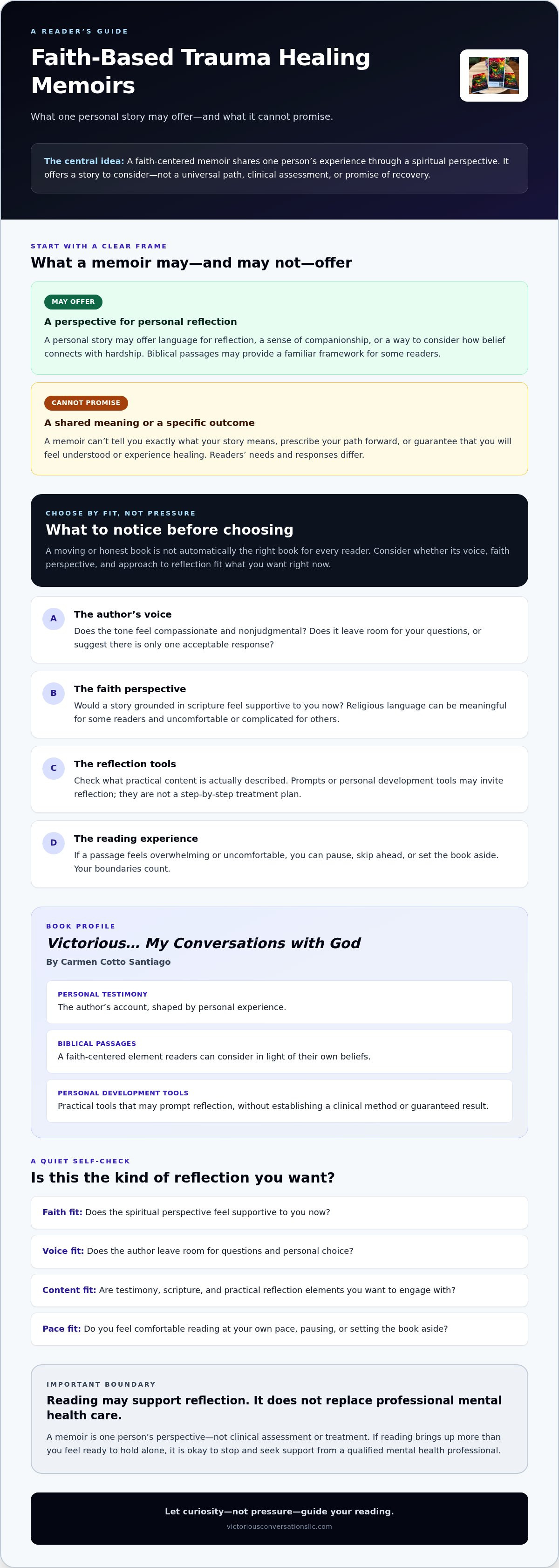
Choosing a memoir is personal. You don’t have to decide whether it’s “good for everyone.” Consider whether its perspective and approach feel useful to you now. Use this self check to assess Victorious… My Conversations with God by Carmen Cotto Santiago, or any other faith based trauma healing memoir.
- Check the faith fit. Does the book’s spiritual language align with your beliefs, or are you open to a perspective that may differ from your own? Notice whether biblical reflection feels welcoming, thought provoking, or uncomfortable.
- Consider the author’s voice. Does the writing feel respectful and compassionate? You don’t need to identify with every part of the author’s life. Ask whether the perspective offers companionship or insight, even if your experiences differ.
- Decide what kind of content you want. Are you looking mainly for a personal story, spiritual reflection, practical personal development tools, or a combination? The memoir brings together testimony, biblical passages, and personal development tools. Check the book description for details that matter to you.
- Choose a manageable reading experience. Would you prefer to read slowly, pause often, or explore a little at a time? Consider your current emotional readiness, and give yourself permission to change your mind.
Before purchasing, review the book description and any available preview. Access to previews varies, so check current retailer information rather than assuming you can sample the text. If there’s no preview, the description can still help you assess the stated perspective and content.
When another kind of support may be a better next step
If you’re seeking help tailored to your circumstances, a qualified mental health professional can offer individualized support that a memoir cannot. You might also choose a different book or resource if this one’s faith perspective or approach doesn’t feel right. There’s no failure in changing course. Setting a book aside can be a thoughtful way to honor what you need.
If the memoir’s description matches the kind of reflection you’re seeking, explore the memoir’s details. You don’t need to share your story or make a purchase to decide whether its approach resonates.
Explore Victorious… My Conversations with God as a faith-centered memoir
Victorious… My Conversations with God is a memoir by Carmen Cotto Santiago that brings personal testimony together with biblical passages and practical tools for personal development. Rather than treating these elements as a formula, consider how they work alongside one another: the testimony offers the author’s perspective, scripture provides a faith centered lens, and the practical tools invite personal reflection.
This combination may interest readers seeking a faith based trauma healing memoir that makes room for spiritual reflection and personal growth. A reader who values biblical language may appreciate passages alongside a personal account. Someone drawn to reflective activities may be curious about the personal development tools. Whether the book fits depends on your beliefs, preferences, and comfort with the material. It shares one perspective, not a prescription for everyone.
What the book brings together
You can approach the book’s elements at your own pace. Read the testimony as one person’s story, consider what the biblical passages mean to you, and decide whether the personal development tools support the kind of reflection you want. Don’t assume any specific passage or exercise. Check the book description or text for details, and take what feels useful without expecting a guaranteed outcome.
Victoriosa… Mis Conversaciones con Dios is also offered as the Spanish language title. Check the current book information to decide which language offering better suits your reading preference.
Where to learn more or find the book
If you’re considering the memoir, review the current information on the Victorious Conversations website. Formats and retailer availability can change, so check the latest details and available purchase links there. The description can help you decide whether the book’s faith perspective and mix of testimony and personal development tools match what you’re looking for.
Exploring the book is simply a chance to learn more. You don’t need to disclose personal experiences or decide in advance what the memoir will mean to you. Take your time, and let your own sense of readiness guide your next step.
Explore Victorious… My Conversations with God
Choose a Next Step That Feels Right for You
A faith based trauma healing memoir can offer a personal perspective, spiritual reflection, and ideas to consider, but it can’t prescribe a universal path or replace individualized mental health care. Choosing a book comes down to fit: consider whether its voice, faith perspective, and approach feel supportive to you. You’re free to read slowly, pause, or choose another resource.
Victorious… My Conversations with God, by Carmen Cotto Santiago, brings together personal testimony, biblical passages, and practical personal development tools. These elements may invite reflection, but no memoir can promise a particular outcome. Let your beliefs, boundaries, and sense of readiness guide you.
If you’re curious about the book, explore Victorious… My Conversations with God. Review the available information and decide whether its approach feels meaningful to you. There’s no pressure to share your story or move faster than feels comfortable. Your path is yours to shape, one thoughtful step at a time.
Frequently Asked Questions
What is a faith-based trauma healing memoir?
A faith based trauma healing memoir is a personal account of difficult experiences interpreted through a spiritual perspective. It may bring together the author’s story, faith reflections, and ideas for readers to consider. A memoir shares one person’s experience, not a universal path or clinical treatment plan. Take meaning from what resonates and leave aside what doesn’t fit your beliefs or circumstances.
Can a faith-based memoir help with trauma recovery?
A faith based memoir may offer companionship, a different perspective, or prompts for personal reflection, but its effects vary by reader. It can’t promise recovery or determine what support you need. If the story or spiritual perspective feels meaningful, explore it at your own pace. If you need help tailored to your situation, consider speaking with a qualified mental health professional.
Can a memoir replace therapy or counseling?
No. A memoir is personal testimony, not clinical care. An author can share their experiences and reflections, but can’t assess your needs, diagnose you, or prescribe treatment through a book. If you’re looking for individualized mental health support, consider contacting a qualified professional. A faith centered book may sit alongside other forms of support if that feels right for you, but it shouldn’t be treated as a substitute for care.
How do I choose a Christian memoir about healing trauma?
Consider whether the author’s voice feels respectful, whether the spiritual language fits your beliefs, and whether you want testimony, reflection tools, or both. Read the book description and check whether a preview is available, since access varies. Also think about your comfort and readiness. You can pause, choose a different resource, or decide that a particular perspective isn’t right for you.
What should I expect from Victorious… My Conversations with God?
Victorious… My Conversations with God by Carmen Cotto Santiago brings together personal testimony, biblical passages, and practical tools for personal development. Readers interested in this mix may use it as an invitation to reflect on the author’s story and consider what feels meaningful to them. It isn’t a universal prescription, clinical resource, or promise of a specific healing outcome. Your response may differ from another reader’s.
Is Victorious… My Conversations with God available in Spanish?
Yes. The Spanish language offering is titled Victoriosa… Mis Conversaciones con Dios. Victorious Conversations offers the memoir in English and Spanish. Check the current book information to decide which language version suits you. Formats and retailer availability can change, so confirm the details before purchasing rather than assuming where or how the book is offered.
How can I read a memoir about trauma without feeling overwhelmed?
Set a pace that feels manageable. You might read a short section, take a break, or skip material that doesn’t feel right to engage with today. You can also set the book aside. If reading brings up difficult feelings, consider reaching out to someone you trust or a qualified mental health professional. You don’t have to finish a book or disclose personal experiences to reflect on what you’ve read.