
What if a faith-centered book could offer companionship without pretending to have every answer? When painful emotions leave you feeling alone, words rooted in faith may bring comfort and space to reflect. Still, you may wonder whether a book will respect your experience or ask you to move faster than you’re ready. The best faith based emotional healing books offer hope without making healing sound simple or guaranteed.
You deserve spiritual reassurance that honors your questions, boundaries, and pace. This article will help you assess a book’s approach, including how it balances lived experience, scripture, and practical reflection. You’ll also learn how reading can sit alongside other forms of support when you need more than a book can provide. Take what feels useful, leave what doesn’t, and remember: seeking support is not a lack of faith.
Key Takeaways
- Faith based emotional healing books can offer spiritual companionship and reflection, but they aren’t guaranteed solutions or universal instructions.
- Notice how a book uses personal testimony, biblical passages, and reflection prompts, then consider what feels meaningful for your experience.
- Check the description and sample pages for tone, faith perspective, and exercises that respect your needs and boundaries.
- Reading may offer encouragement, but it doesn’t replace support from a licensed mental health professional when you need clinical care.
- A memoir such as Victorious… My Conversations with God brings together personal testimony, biblical passages, and practical tools as one option to explore.
What Can Faith based Emotional Healing Books Offer During a Difficult Season?
When emotions feel heavy, you may be looking for more than advice. Perhaps you want words for an experience you haven’t been able to explain, a reminder that you’re not alone, or spiritual companionship while you find your footing. Those needs are real, and you don’t have to minimize them to make room for hope.
Faith based emotional healing books connect emotional reflection with a faith perspective. They can offer encouragement and insight, but they can’t promise a particular healing outcome. Some include personal stories, scripture, questions for reflection, or practical exercises. This overlaps with the broad idea of bibliotherapy, the use of books as a therapeutic tool. For background, see What is Bibliotherapy? A faith-centered book, however, isn’t automatically clinical treatment or a substitute for individualized care.
Why readers turn to faith when emotions feel difficult
For some readers, prayer, belief, or scripture can help them find meaning, feel connected to something beyond immediate pain, or return to words that bring comfort. For others, faith may feel complicated, distant, or changeable. Your response doesn’t have to match anyone else’s. Feeling distressed doesn’t mean your faith is weak or that you haven’t prayed enough. Pain deserves compassion, not blame.
What emotional support from a book can look like
A writer’s testimony may put language to feelings you’ve kept private. Compassionate words can make a difficult moment feel less isolating, while a question or prompt may help you notice what you need next. These are invitations to reflect, not a diagnosis, therapy, or professional care tailored to you. You’re allowed to pause, skip a passage, or set the book aside if its content feels overwhelming or doesn’t fit.
Choose a pace that feels manageable. You might read a few pages, sit with one idea, or leave the book closed for a while. There’s no requirement to finish it or agree with every perspective. A helpful book leaves room for your questions and boundaries rather than insisting that one story or spiritual practice must work for everyone.
Think of faith based emotional healing books as possible companions on a hard stretch of the road, not maps that dictate every turn. They may offer a moment of recognition or a gentle prompt for reflection. If your distress feels difficult to manage, reading can sit alongside support from a licensed mental health professional. You don’t have to choose between spiritual reflection and seeking appropriate care.
How Faith, Testimony, and Reflection Work Together in Healing Books
Faith-centered books can bring together three elements with different purposes. A personal story offers a glimpse of one person’s lived experience. Biblical passages may offer spiritual context for readers who welcome them. Reflection prompts invite you to consider your own feelings and choices. Together, these elements can create space to think without requiring you to interpret a story or scripture in one prescribed way.
Mental Health America describes ways faith may positively impact your mental health, including through sources of hope and connection. A book may invite similar reflection, but each reader’s spiritual life and circumstances are personal. The meaning you find in a passage may differ from the author’s or another reader’s, and that difference deserves room.
Personal testimony: recognition without comparison
A memoir or testimony can give words to feelings that have been difficult to name. You might recognize a moment of fear, grief, or renewed trust in someone else’s account and feel less alone. Testimony can offer companionship in a difficult season without prescribing the same path or outcome for every reader. Let the author’s story be one person’s experience, not a measure of your progress. Your circumstances, pace, and next steps are your own.
Scripture and reflection: meaning at the reader’s pace
Biblical passages may help readers connect personal struggles with the language and teachings of their faith tradition. Practical prompts can turn reading into a gentle conversation with yourself, rather than a test you must pass. For example, you might ask:
- What feeling does this passage bring up for me?
- Is there an idea here I want to carry with me, or do I need more time?
- What kind of support would feel helpful right now?
These questions make room for curiosity. They don’t demand instant forgiveness, gratitude, certainty, or a positive interpretation. If a passage feels confusing or troubling, you can pause and talk it through with someone you trust in your faith community. A different perspective may help, but you’re not required to accept an interpretation that dismisses your experience.
Some faith based emotional healing books weave testimony, scripture, and practical reflection together in a personal rather than prescriptive way. Victorious… My Conversations with God, for example, combines personal testimony, biblical passages, and practical personal-development tools. If you’re curious about this kind of faith-centered memoir, consider it as one possible reading choice, not a promise of a particular result.
How to Choose a Faith-Based Emotional Healing Book That Fits
The right choice isn’t the book with the biggest promise. It’s one whose perspective, tone, and reading experience feel respectful of what you need right now. Use this checklist to compare options without expecting any single title to suit every reader.
- Name what you’re seeking. Are you looking for a personal story, scripture-based encouragement, guided questions, practical tools, or a blend?
- Consider your faith tradition. Check whether the author’s beliefs and use of scripture feel familiar, interesting, or mismatched with your own.
- Preview the voice and content. Read the description and sample pages, if available. Notice whether the language feels compassionate and whether the material includes themes you may want to approach carefully.
- Choose a comfortable format and pace. Decide whether you prefer a memoir, devotional reading, guided reflection, or a combination. Consider what feels manageable to read at this point in your life.
- Keep expectations grounded. Look for encouragement and reflection, not promises of a cure or guaranteed recovery. A book can offer perspective, but it isn’t individualized professional care.
A good fit is personal: choose a book whose faith perspective, tone, and format meet your needs without asking you to ignore your boundaries.
Check the book’s perspective, tone, and content
Look at who wrote the book and whether it draws on personal experience, spiritual teaching, or another stated perspective. These can each offer something different, but they aren’t interchangeable. Notice whether the author presents one interpretation as universal or leaves room for readers to reflect. If content notes or sample pages are available, use them to check for subjects or language that may feel difficult for you.
Pay attention to the book’s claims, too. Compassionate wording can acknowledge struggle without blaming readers for their emotions. Practical exercises should feel invitational, not like requirements. If you’re looking for clinical guidance, check whether the book distinguishes encouragement from treatment rather than assuming that a faith focus makes it clinical care.
Match the reading experience to your needs
A memoir may feel companionable; a devotional may offer brief readings; guided reflection may give you questions to sit with. A combination can bring these elements together, but only if that structure feels helpful to you. Start with a manageable passage instead of committing to a demanding schedule. You can pause, skip a section, or stop reading. That isn’t failure; it’s a way to honor your limits and choose what supports you.
Can a Faith-Based Book Replace Therapy? Set Gentle, Realistic Expectations
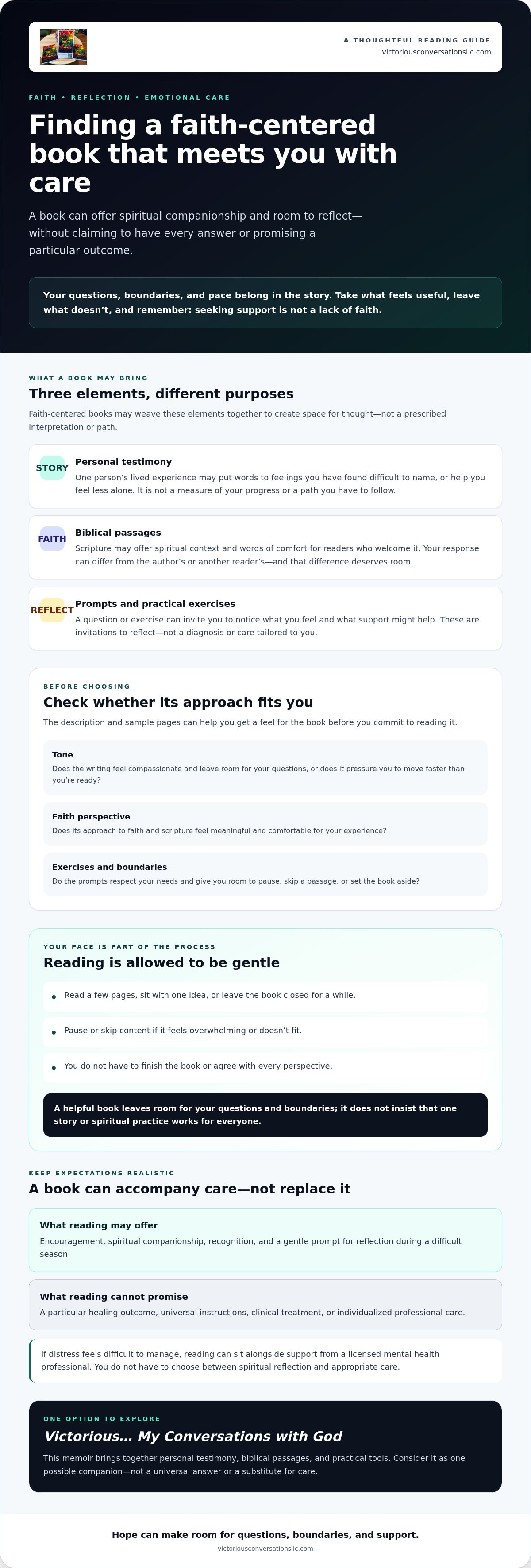
No. A faith-based book can offer reflection, spiritual encouragement, or the comfort of recognizing your experience in someone else’s words, but it isn’t a substitute for care from a licensed mental health professional. Reading alone can’t provide individualized assessment or clinical treatment, and no book can promise recovery.
That distinction doesn’t make a book meaningless. It helps set realistic expectations. Faith based emotional healing books may sit alongside support from trusted people, a faith community, or a qualified professional. They can offer language for reflection, but they can’t know your full circumstances or determine what kind of care you need.
When a book may feel supportive, and when it may not
A book may feel comforting at one point and too difficult at another. Notice how you feel as you read. If a passage brings up emotions you’re not ready to explore, you can pause, skip ahead, or put the book away. You don’t have to push through to prove commitment or faith. Reading is one possible source of support, not an obligation.
If distress feels persistent, severe, or hard to manage, consider reaching out to a qualified mental health professional. A book can complement that support, but it shouldn’t be asked to carry more than it can. You’re allowed to seek help even if you’re also praying, reading scripture, or leaning on your community.
How faith and professional support can coexist
Seeking professional care doesn’t diminish your faith or spiritual commitment. If your beliefs matter to you, you can tell a licensed professional about your spiritual preferences and ask how those concerns may be respected in your care. You can also seek trusted support within your faith community, while remembering that spiritual encouragement and licensed clinical care serve different purposes.
If you or someone else is in immediate danger, contact local emergency services or crisis resources. Reaching out is a protective step, not a failure of faith.
If you’re looking for a faith-centered reading companion to use alongside other support, you can explore a reflective faith-based memoir as one possible option.
Explore a Faith-Based Emotional Healing Memoir as One Possible Next Step
After considering what you need from a book, you may find that a personal memoir feels more welcoming than a set of instructions. A memoir shares one person’s experience, offering a perspective to reflect on rather than a formula you’re expected to follow. If that approach appeals to you, Victorious… My Conversations with God is one faith-centered example to consider.
A memoir that brings testimony and faith into conversation
The memoir brings together personal testimony, biblical passages, and practical personal-development tools. Each element offers a different way to engage: the testimony presents an individual story, the passages bring in a faith perspective, and the tools invite personal reflection. The book is not a universal blueprint, a clinical resource, or a promise of a particular emotional outcome. Consider which elements speak to you and which may not fit your needs.
A Spanish-language version is also listed as Victoriosa… Mis Conversaciones con Dios. If you’re comparing faith based emotional healing books, these elements can help you decide whether a memoir that combines story, scripture, and practical reflection matches the reading experience you want. Your response to another person’s account is your own; recognition can be meaningful without requiring comparison.
Choose your next step with care and curiosity
Before deciding, review the book details available to you and consider whether its described approach aligns with your beliefs, preferences, and boundaries. You don’t need to make a decision simply because you’re searching for hope. Let curiosity lead, and give yourself permission to choose a different kind of resource if this one doesn’t feel right.
Reading can be one part of a wider circle of support, alongside trusted relationships, community, or professional care. A book may offer reflection, but it isn’t a substitute for individualized clinical support when that’s what you need. There’s room for both spiritual reading and other forms of help.
If this reflective approach feels aligned with what you’re looking for, you can explore Victorious Conversations and review the book information for yourself.
Choose a Reading Path That Honors Your Needs
Faith based emotional healing books can offer a thoughtful place to pause, reflect, and find spiritual companionship. Look for a voice and faith perspective that respect your experience, and remember that a book can encourage reflection without promising a particular outcome. Reading can complement support from trusted people or a qualified professional, but it doesn’t replace clinical care when that’s what you need.
If a personal memoir feels like a helpful next step, Victorious… My Conversations with God brings together personal testimony, biblical passages, and practical tools. The listed Spanish-language title is Victoriosa… Mis Conversaciones con Dios. These are options to explore, not universal guides to healing.
Take your time. Review the book details and notice how its approach feels. To learn more about the memoir, explore Victorious Conversations.
Frequently Asked Questions
Can faith-based emotional healing books help with painful emotions?
They may offer comfort, language for reflection, or a sense of companionship, but they can’t guarantee a particular outcome. Faith based emotional healing books often bring together personal stories, spiritual perspectives, and reflective prompts. Consider how the author’s approach feels to you, and take what’s useful without treating the book as a universal answer. If painful emotions feel difficult to manage, a book can sit alongside support from trusted people or a qualified professional.
Are faith-based healing books a substitute for therapy?
No. A faith-based book may encourage reflection or offer spiritual reassurance, but it doesn’t provide individualized assessment or licensed clinical care. If distress feels persistent, severe, or hard to manage, consider contacting a qualified mental health professional. Your faith and professional support can coexist. If spiritual preferences are important to you, you can discuss them with the professional you consult and ask how they may be respected in your care.
How do I choose a Christian book for emotional healing?
Start by asking what you want from reading: a personal story, biblical passages, guided questions, practical tools, or a mix. Check the description and sample pages, if available, for the author’s perspective, tone, scripture use, and any content that may feel difficult. Consider whether the book respects your boundaries and beliefs. You can begin with a short section and stop if its approach doesn’t feel supportive.
Can a memoir help me feel less alone in my healing journey?
It can. A memoir may help you recognize feelings or experiences in another person’s story, offering companionship through lived experience. But one person’s account isn’t a template for your circumstances, pace, or next steps. For example, Victorious… My Conversations with God combines personal testimony, biblical passages, and practical tools. A Spanish-language title, Victoriosa… Mis Conversaciones con Dios, is also listed.
What should I do if a faith-based healing book brings up difficult feelings?
Pause or stop reading if the material feels overwhelming. You can skip a passage, take a break, or set the book aside without guilt; you don’t owe any book continued attention. Notice what feels difficult and consider talking with someone you trust. If the feelings persist or become hard to manage, reaching out to a qualified mental health professional may help you find support that fits your needs.
Can I read a faith-based emotional healing book if my beliefs are complicated?
Yes. You don’t need to feel certain, settled, or connected to a faith tradition in one particular way to explore a book. Check its description and sample pages to see whether the author’s perspective feels respectful of your questions. You’re free to disagree with an interpretation, read selectively, or put the book aside. Choose what makes room for honest reflection rather than pressuring you to feel a prescribed way.

